
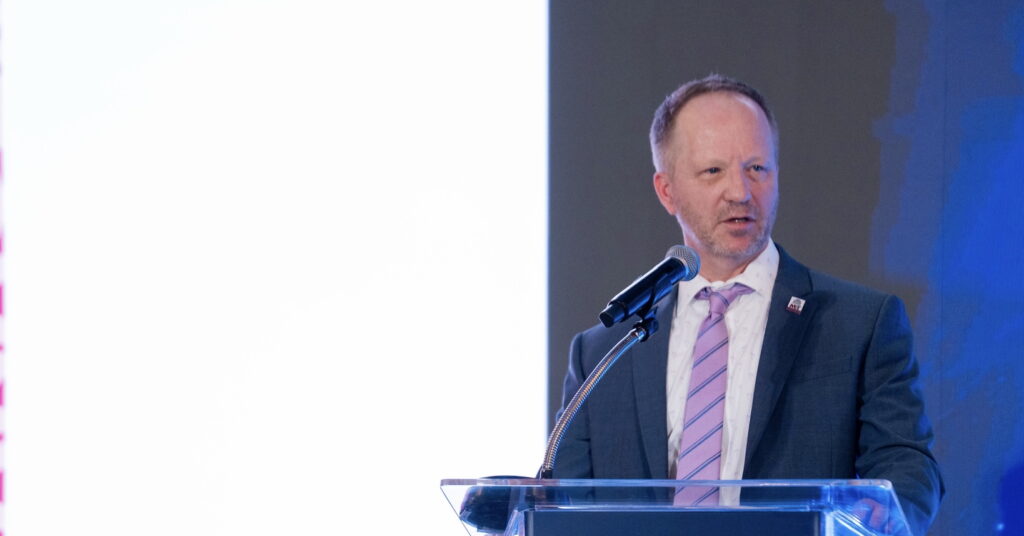
Christopher R. Knittel
Associate Dean for Climate and Sustainability
George P. Shultz Professor of Energy Economics
MIT Sloan School of Management
Director, MIT Center for Energy & Environmental Policy Research
Director, MIT Climate Policy Center
Co-Director, Environmental and Energy Economics Group, NBER
Bio
Christopher Knittel is the Associate Dean for Climate and Sustainability and the George P. Shultz Professor of Energy Economics in the Sloan School of Management at MIT. He directs the Center for Energy and Environmental Policy Research. CEEPR, established in 1977, is the hub for social science work related to energy and the environment at MIT. He is also the director of MIT’s new Climate Policy Center. Finally, along with Meredith Fowlie at UC Berkeley, he co-directs the Environmental and Energy Economics Program at the National Bureau of Economic Research. He is the former co-editor of the Journal of Public Economics, and an associate editor of the Journal of Transportation Economics and Policy and Journal of Energy Markets.
Knittel’s research studies consumer and firm decision-making and what this means for the benefits and costs of environmental and energy policy. He often interacts with policy-makers to discuss his research findings and the current research needs of policy. His current work involves studying how the costs of climate change policy vary across households and firms and how this differs across policy choices. Knittel uses a variety of empirical methods for his research, including large-scale randomized control trials, machine learning techniques, and structural models. Professor Knittel received his B.A. in economics and political science from the California State University, Stanislaus in 1994, an M.A. in economics from UC Davis in 1996, and a Ph.D. in economics from UC Berkeley in 1999.
Featured Media Mentions

January 21, 2026
The 5 Big Reasons Why Electricity Bills Are So High Right Now
TIME Magazine
Electricity costs have been steadily rising for years, outpacing inflation. The average monthly residential electricity bill increased nearly 30% rise in 2025.
https://time.com/7355839/why-are-electricity-prices-high-2026

October 20, 2025
Flexible data centers can reduce costs — if not emissions
MIT Sloan Ideas Made to Matter
Data center flexibility — the ability to shift workloads to different times of day when renewable energy generation is high or prices are low — is one way to address rising energy consumption.

May 6, 2025
Is the clean energy economy doomed?
Marketplace Podcast
Episode 1386
Prof. Christopher Knittel joins the Marketplace podcast “Make Me Smart” to discuss how the U.S. can be in the best position for global energy dominance. “The world is switching to electric vehicles, the world is switching to solar and wind,” says Knittel. “And the less we do domestically, the less capability we build domestically to provide those clean energy resources, the worse off our industries will be in the future.” Check out the full podcast at the link below:
https://www.marketplace.org/episode/2025/05/06/is-the-clean-energy-economy-doomed